Copywriting
Website copy that says it plainly.
Words that explain what you do, answer what customers are already asking, and give each page a reason to rank: that is what website copywriting is for.
Most websites are badly written.
Not because the businesses are, but because nobody was given the job.
You know your business too well to write about it. You skip the obvious because it is obvious to you, use the words your trade uses rather than the ones customers use, and run out of time before the page about your most profitable service gets written at all.
Copywriting is the job of standing where the customer stands. What are they trying to do? What do they not understand yet? What would make them pick up the phone? Then saying it, plainly, in the order they need to hear it.
What you get.
Finished pages, ready to publish, written to a plan.
- Messaging and voiceWhat the business stands for and how it should sound, agreed before any page is written.
- Page planEvery page with one clear topic, the search it answers and the action it asks for. No overlap, no filler.
- Page copyHeadlines, body copy, calls to action and the small words on buttons and forms, for each page.
- Product and service descriptionsWritten to remove the doubts that stop people buying or enquiring.
- Search-aware writingThe words customers actually use, the questions they ask next, and titles and descriptions for every page.
- Guides and articlesSupporting content that earns visits and builds trust, planned around real questions.
- EditingExisting copy sharpened rather than replaced when it already knows the business.
- ProofreadingEverything checked before it goes live, including the pages nobody thinks to check.
- HandoverCopy delivered page by page in a format that drops straight into the site.
How it works.
Plan the pages before writing a word.
Each page gets a job: what it is about, who it is for, what they search to find it and what it should ask of them. Writing to a plan is what stops a website repeating itself, and it is why the pages rank for different things instead of competing with each other.
- Keyword and page map
- Questions to answer on each page
- Calls to action decided up front
Write it plainly.
Short sentences. Specific claims. The customer’s words rather than the industry’s. Headlines that say what the page is about and openings that confirm the visitor is in the right place. Persuasion without hype, because exaggeration is the fastest way to lose a reader.
- Home page first to set the voice
- Drafts you can react to, then refine
- Everything proofread before launch
Fit it to the design.
Copy and design are the same page. Headlines are written to the lengths the layout needs, buttons say exactly what happens next, and nothing important is buried in a paragraph nobody will read on a phone. When I design the site too, the two are built together.
- Written for the screen it will be read on
- Buttons and forms included
- Titles and descriptions for search results
Six rules I write by.
They are simple. They are also rare.
- Say what you do in the first line.If a visitor has to scroll to find out what the business does, the page has already failed.
- Use the customer’s words.People search for a “wedding photographer”, not “visual storytelling for your special day”.
- Be specific.“Open seven days, 9 to 9” beats “excellent customer service” every single time.
- One topic per page.A page that tries to be about everything ranks for nothing and persuades nobody.
- Answer the next question.Price, timing, what happens next, what if it goes wrong. Answer them before they are asked.
- Ask for one thing.Every page ends with a clear next step. Not three. One.
Copy in practice.
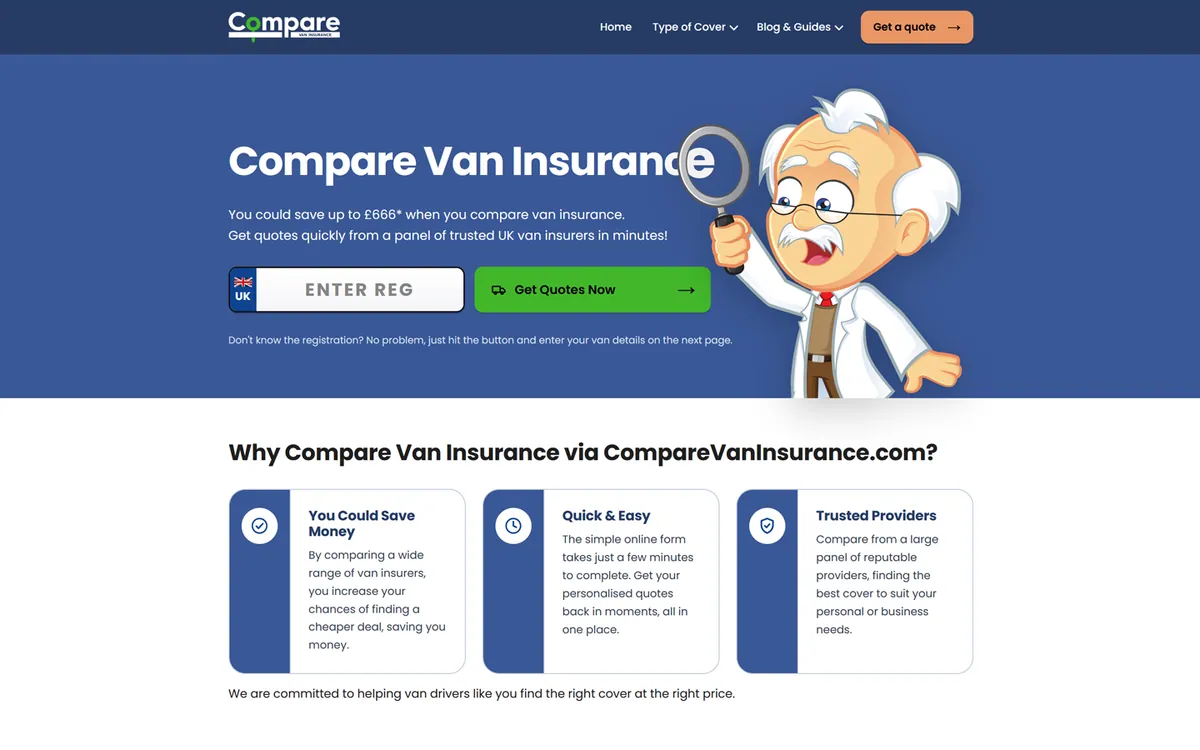
The content plan behind Compare Van Insurance is copywriting doing SEO’s job: one topic per page, written to rank. For what pages a site needs in the first place, see the small business website checklist.
Often paired with.
Web Design
Bespoke, responsive websites designed around your customers and what you want them to do.
Learn more about web designWebsite Redesign
Keep what works, fix what doesn’t, and relaunch a site that is faster and easier to find.
Learn more about website redesignEcommerce Websites
Online shops built to be found, trusted and bought from.
Learn more about ecommerce websitesAds Management
Google Ads campaigns and landing pages planned around enquiries, not clicks.
Learn more about ads managementBrand & Graphic Design
Logos, visual identity and graphics that look right on screen and in print.
Learn more about brand & graphic designCopywriting questions, answered.
Alongside it. Design on real words produces far better pages than design on placeholder text with the copy squeezed in later. When I am building the website as well, the two are developed together; when the site already exists, the copy is written to fit it.
By asking. A conversation about what you do, who buys it, what they ask before they buy and why they choose you over the alternatives usually gives me most of what I need. The rest comes from your existing materials, reviews and the questions people search for.
Yes. The first draft of the home page sets the voice, and we adjust until it reads like you on a good day: plainer, warmer or more formal as the business needs. The rest of the site follows that voice.
Good website copy is SEO copywriting, if it is planned around what people search for. Each page gets one clear topic, uses the words customers use, and answers the questions they ask next. There is no keyword stuffing, because Google no longer rewards it and readers never did.
Often that is the better job. If the existing copy knows the business but reads badly, editing keeps the knowledge and fixes the reading. I will tell you honestly which pages need rewriting and which need a light touch.
Yes. Supporting articles that answer the questions your customers ask are one of the most reliable ways to earn search traffic, and I write them to be genuinely useful rather than to hit a word count.
Let’s get the words right.
Send me your web address, or the pages that need writing, and a line about who you are trying to reach. Website copywriting starts with knowing who is reading.
- 1You send a few lines.What the business does and what the website needs to do.
- 2I reply, personally.Usually the same day, with questions and a time for a call.
- 3You get a written proposal.Scope, stages and price for exactly that. No obligation, no hard sell.
Monday to Sunday, 9am to 9pm. You talk to me, not an account manager.