Software Development
Software built for the way your business actually works.
Booking systems, customer portals, dashboards, WordPress plugins and integrations: custom software development is for when an off-the-shelf tool is almost right but not quite.
When the spreadsheet stops coping.
Most custom software starts as a process that got too big for phone calls and spreadsheets.
Every business has a process like that. Bookings that are taken by phone and written in a diary. Quotes that take an afternoon because the prices live in someone’s head. Orders re-typed from the website into the accounts package. They work, until the day they do not.
Custom software replaces that process with something that runs itself: a booking that checks availability and takes payment, a quote that builds itself from the options chosen, an order that lands in the accounts without anyone touching it. Built for your process, not a generic version of it.
Things I build.
A few shapes the work usually takes.
- Booking and schedulingAvailability, deposits, reminders and a calendar your team can actually use. Trips, tables, courts, consultations.
- Quoting and configuratorsCustomers choose options and see a price; you get a quote request with everything filled in.
- Customer portalsSecure areas where clients see their orders, documents, progress or account, without emailing you.
- Dashboards and reportingThe numbers from several systems in one place, updated automatically.
- WordPress pluginsFeatures your theme lacks, built properly, from small tweaks to full systems inside WordPress.
- Integrations and automationWebsite to CRM, orders to accounts, forms to spreadsheets, and the manual steps in between removed.
- Internal toolsAdmin screens for the jobs your team does every day, designed around how they actually do them.
- Calculators and toolsInteractive tools for your website that help customers decide, and bring in enquiries while they do.
- Data and migrationsMoving information between systems cleanly, and keeping it clean afterwards.
How it works.
Small, working releases rather than one big reveal.
Map the process first.
Before any code, we walk through how the job is done today, step by step, including the exceptions that only come up on Fridays. The software is designed around that, so it fits the business rather than forcing the business to fit it.
- Process map in plain language
- Scope agreed with a fixed first release
- Data and integrations identified early
Build the smallest version that works.
The first release does the core job and nothing else, and you use it. Real use shows what matters far better than a specification does, so the next releases are shaped by what you learned rather than by what we guessed.
- Working software early, improved in steps
- Tested with real data and real users
- Documented as it goes, not afterwards
Keep it running.
Software lives in a changing world: platforms update, APIs change, the business grows. A care plan keeps it monitored and maintained, and small improvements can be made as you need them. You own the code throughout.
- Monitoring and backups
- Updates tested before they go live
- Source code and documentation handed over
The right tools, chosen for you.
Boring technology, used well, outlasts clever technology used badly.
I build with PHP, JavaScript, React where an interface needs it, and well-understood databases. They are not fashionable choices, and that is the point: they are stable, widely supported, cheap to host and easy for another developer to pick up in ten years’ time.
Where a ready-made tool does the job well, I will tell you to use it. Custom software is for the gap between what is available and what you need, and the best projects are the ones where that gap is clear.
WordPress developmentSoftware in practice.
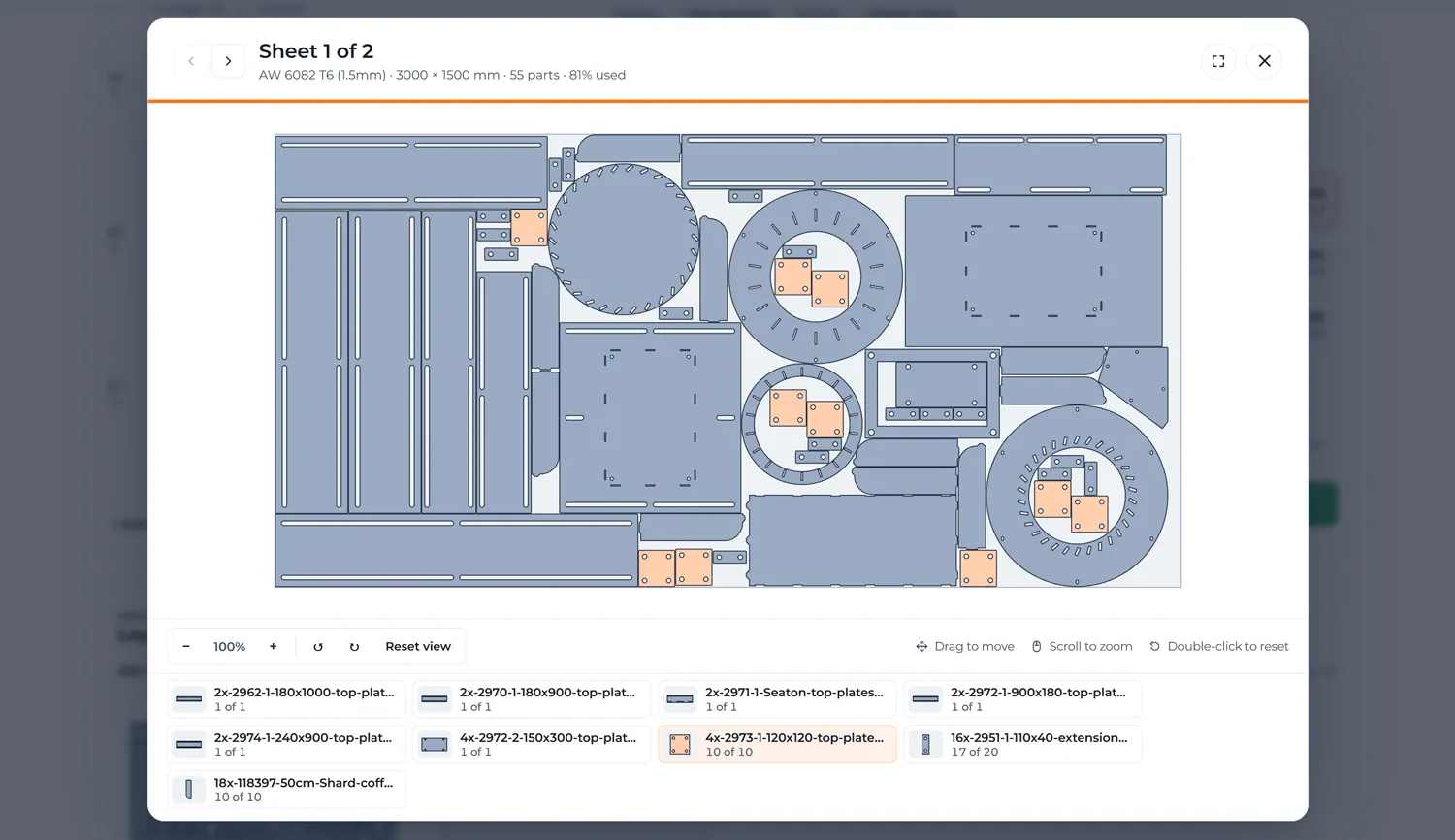
Quote & Cut is a plugin, a nesting engine and a SaaS business built as one system; the Compare Van Insurance quote journey is custom code inside an otherwise simple site. Either shows the approach.
Often paired with.
Web Design
Bespoke, responsive websites designed around your customers and what you want them to do.
Learn more about web designWebsite Redesign
Keep what works, fix what doesn’t, and relaunch a site that is faster and easier to find.
Learn more about website redesignEcommerce Websites
Online shops built to be found, trusted and bought from.
Learn more about ecommerce websitesCopywriting
Clear website copy that answers the questions your customers are already asking.
Learn more about copywritingWebsite Care
Updates, backups, monitoring and small changes, so the site keeps performing.
Learn more about website careSoftware questions, answered.
Web-based tools that run in a browser: booking and quoting systems, customer portals, dashboards, calculators and configurators, internal admin tools, WordPress plugins, and integrations that join two systems together, such as a website and an accounting package. If the problem can be solved with a well-built web application, it is probably in scope.
Plain PHP and JavaScript for most things, React where an interface needs it, MySQL or SQLite for data, and whatever APIs the job requires. The choice follows the brief and the need to keep it maintainable: I avoid heavy frameworks when a simpler build will last longer and cost less to run.
Yes. Custom plugins are a large part of this work: anything from a small feature your theme is missing to a full booking or membership system that lives inside WordPress and uses its editor and user accounts.
Yes. Integrations with CRMs, accounting software, payment providers, booking platforms, email tools and bespoke systems are common. The aim is usually to remove re-typing and make information flow automatically.
You do. Everything built for you is handed over with the source code, documentation and the accounts it runs in. You are never locked in to me.
Software needs looking after as platforms and APIs change. A care plan covers updates, monitoring and small improvements, or I can hand over to your own developer with proper documentation.
Describe the process that needs fixing.
A few lines about what happens today and what you wish happened instead is the best possible brief for custom software development.
- 1You send a few lines.What the business does and what the website needs to do.
- 2I reply, personally.Usually the same day, with questions and a time for a call.
- 3You get a written proposal.Scope, stages and price for exactly that. No obligation, no hard sell.
Monday to Sunday, 9am to 9pm. You talk to me, not an account manager.